 |
| One of the "LCC", Peach Aviation |
Tuesday, May 7, 2013
Japan for Budget Travelers, Finally!


Thursday, May 2, 2013
Ten Things I Will Do On My Next Trip to Tokyo

 1.) Buy Drinks from Vending Machines: I am amazed by
Japan’s vending machines 自動販売機
(ji-dou-hanbai-ki), which you’ll find everywhere you go, in the city, suburbs,
and small villages. They sell such an incredible variety
of items, from drinks to books to electronics. I like the selection of drinks the best. They can be hot, cold,
non-alcoholic, alcoholic, typical -- Coke, coffee, tea, Fanta Orange, energy
drinks, and unusual -- aloe water, multi-vitamin infused, cucumber soda, Pepsi
Pink, which is a strawberry milk product... I will stick to buying my favorites: iced coffee and milk tea. Vending machine items are available 24/7 by inserting spare change or, for residents, by swiping with a smartphone.
1.) Buy Drinks from Vending Machines: I am amazed by
Japan’s vending machines 自動販売機
(ji-dou-hanbai-ki), which you’ll find everywhere you go, in the city, suburbs,
and small villages. They sell such an incredible variety
of items, from drinks to books to electronics. I like the selection of drinks the best. They can be hot, cold,
non-alcoholic, alcoholic, typical -- Coke, coffee, tea, Fanta Orange, energy
drinks, and unusual -- aloe water, multi-vitamin infused, cucumber soda, Pepsi
Pink, which is a strawberry milk product... I will stick to buying my favorites: iced coffee and milk tea. Vending machine items are available 24/7 by inserting spare change or, for residents, by swiping with a smartphone. Some
machines also sell food,
even fresh Dole bananas.
Some
machines also sell food,
even fresh Dole bananas.

 3.) Rent a Bicycle These services have become
popular during the past several years. When I lived here I bought a bicycle.
Once I lost it by parking illegally, which was very upsetting. Bike sharing and bike rentals have become a
great way to get around by bicycle, for both visitors and residents. See the blog post appearing this month for more information.
3.) Rent a Bicycle These services have become
popular during the past several years. When I lived here I bought a bicycle.
Once I lost it by parking illegally, which was very upsetting. Bike sharing and bike rentals have become a
great way to get around by bicycle, for both visitors and residents. See the blog post appearing this month for more information.4.) Sing at Karaoke I’m not a person with a talent to sing 歌う(utau), but the karaoke bars in Japan are so interesting to experience. To go to karaoke カラオケ is a very popular pastime and I like to take part when with a group of friends are going. I often went to karaoke with coworkers when I lived and worked in Osaka and Tokyo. I can remember a time when the selection was only Japanese songs but now there is a much larger selection of English language songs, too.
5.) Walk Around Harajuku and Omotesando-doori I think Japan fashion is on a level of its own. People seem to know how to dress, and many pay much attention to their appearance. In Tokyo, they dress to stand out, to fit in, and to make a statement; they wear what makes them feel good. I like to read Japanese fashion blogs ブログ (burogu) and fashion magazines 雑誌 (zasshi) to see what Japanese fashionistas like for the current season. Tokyo has the reputation for being one of the main fashion capitals of the world. Walk down beautiful boulevard Omotesando-doori and then turn onto Aoyama-doori and you’ll see why. I also recommend looking around on the shopping street called Takeshita-doori 竹下通り to see what fashion trends the young people like. It is a beehive of teen and 20-somethings packing streets lined with boutiques and shops.
6.) Visit the Tokyo Sky Tree This is definitely on my list since I have only seen it in photos. See a post we added last year about this impressive structure.

8.) Visit a Cat-cafe: This establishment 猫カフェー is a cafe where you can watch 見る(miru) and play 遊ぶ (asobu) with cats 猫 (neko). It’s the perfect opportunity for people who love cats but who are not allowed to have them in their apartments. As I love cats and have one named Geneva Suki, I really want to go. I have never even been to a theme café before. (Maid cafés, robot cafés, and anime-based cafes are other specialty establishments where customers are welcome).
9.) Enjoy Coffee Shops Coffee in Japan is the best. For a front row seat to the Shibuya scramble crossing I like to get a window table at the Starbucks スターバックス in the Tsutaya building right across the Shibuya station 渋谷駅. There is place I haven't been to yet and want to try: the Nezucafe ネヅカフェーin Minami-Aoyama 南青山. It is said to have a fantastic view of a beautiful wooded garden.
 10.) Visit Akihabara (秋葉原). This
vicinity in central Tokyo is known as “Akiba” for short. Some call it Electric
City too. This is said to be the largest district for electronics, computers,
video games and anime in the world. For
many, many blocks in all directions, you can window shop or browse in stores
that carry computer equipment, video games, kitchen electronics, smartphones
and endless electronics supplies. Some
shops are duty free. My favorite is the
newest and largest department store just a block away from Akihabara Station on
the Yamanote Line and Hibiya Line. It is called Yodobashi Akiba. This immense store has nine stories full of
high tech equipment and gadgets. I have seen computers and phones there with
such features I didn’t know were possible!
The newest inventions seem to go on display at this store first, for all to see and
play with.
10.) Visit Akihabara (秋葉原). This
vicinity in central Tokyo is known as “Akiba” for short. Some call it Electric
City too. This is said to be the largest district for electronics, computers,
video games and anime in the world. For
many, many blocks in all directions, you can window shop or browse in stores
that carry computer equipment, video games, kitchen electronics, smartphones
and endless electronics supplies. Some
shops are duty free. My favorite is the
newest and largest department store just a block away from Akihabara Station on
the Yamanote Line and Hibiya Line. It is called Yodobashi Akiba. This immense store has nine stories full of
high tech equipment and gadgets. I have seen computers and phones there with
such features I didn’t know were possible!
The newest inventions seem to go on display at this store first, for all to see and
play with. Tuesday, April 16, 2013
Bike Wars and Rent-a-Cycle
 |
| Uncontrolled bike parking near a station |
Everyone wants to ride their bike to the closest possible station but most stations were never designed to deal with so many bicycles, since most Japanese train stations were built long before most people could afford a bike. But the economic development in 1970's made it possible for each member of family to own a bike. Then this easy mode of transportation in the big city showed its problem side: piles of 放置自転車 (houchi jitensha = neglected bicycles) became a huge social problem in Japan in the 80's.
 |
| "Neglected" bicycles :'( |
The scene in the above image was everywhere by busy stations in Japan. It was like the War between the commuters and the community volunteers of anti-parking-a-bike-near-the-station authority.
 |
| Controlled bike parking, 100 yen/day |
So it might be fair to say most Japanese people living in big cities have had such an experience with doing something wrong when parking their bike. Rules have varied and there has been no appeal system. No choice, they had to go to one of those places to get their bike back. And obviously, not everyone wanted to.
Meanwhile, Japan had a bubble economy that burst. A new trend arose: being "eco-friendly" (conscious of ecology and recycling. Communities worked on new solutions. Sharing bikes was put into practice. The service included bicycle maintenance and parking for a reasonable fee. This system was easier for residents than visitors, though. Too many different companies run the train lines in big cities, visitors could hardly figure things out.
As a result, a number of communities started to rent or share bikes for tourists as well.
"Rent-a-cycle" in resort areas has been pretty common for years but now these bike rental services have come into the big cities. People can rent a bike for a long term instead of owning one to commute, which they likely call "share", as well as visitors rent it for a day or by hour. I think it is a great idea that people can ride a bike from one point to another, whether or not you are a resident or visitor, for a reasonable fee. Unless you really want to, you don't have to "own" a bike anymore. This is progress for the service industry!
Unfortunately, not much information is available in English, but here are some examples.
There are probably a lot more services available at train stations that are near tourist attractions. There should be at least one rent-a-cycle shop somewhere close by.
 |
| Baybike port in Yokohama |
I hear London and Paris have a similar system. Yokohama city currently runs the system as a test case. This service is a combination of contract port-to-port short terms, per day, for a long term contract. A user needs first to register but once you do you can rent a bike from any "port" in the bay area of Yokohama. The user can rent a bike to take from one port to another port (105 yen), or for 24 hours (525 yen), or for a month (1050 or 1550 yen) but you have to get the bike back to the home port in 1 hour from when you first pick up the bike or you will be charged 105 yen/30 min. otherwise. In the bay area, most tourist attractions have the "port", so the user can take the rented bike back to the port instead of parking elsewhere. Users won't get surcharged as long as they ride the rented bike in the area. If they ride it away from any port then they'll pay 105 yen for each extra 30 minutes.
Matsumoto "Sui Sui Town" and "Rikisha" (in Nagano Prefecture)
Two different groups offer FREE rent-a-cycle services in Matsumoto. One group is the association of the local shops and hotels so the shops and hotels rent the bikes. Another is the tourism and convention association whose rental stations are by the tourist attractions. Matsumoto is a city close to the mountainous area called Japan Alps, it has clear air and spring water even inside the city. One of the Japanese national treasures is Matsumoto Castle. It takes only 2.5 hours from Shinjuku (Tokyo) station by JR, 2 hours from Nagoya (Aichi) station. Though many more stations in Japan have a bike rental service, "for free" is not too common! Take advantage of this! In Nagano prefecture, places such as Iida, Shimosuwa, Matsushiro, Obuse, etc., offer rent-a-cycle services for minimal fees.
Selected JR stations in Kyushu offer a rent-a-cycle service by 300 yen for 2 hours, 600 yen for 4 hours and 900 yen for longer than 4 hours. The participating stations are: Karatsu (Saga), Sasebo and Nagasaki (Nagasaki), Hitoyoshi and Kumamoto (Kumamoto), Beppu and Yufuin (Oita), Miyazaki (Miyazaki), and Kagoshima Chuo and Ibusuki (Kagoshima). In Kyushu, Saga city (Saga Station) also provides a renta-cycle service called Kettakuri but the local tourism and convention association provides the service, not JR Kyushu. It seems only private services cover the Hakata (Fukuoka) area.
Hankyu Rent-a-Cycle
This is a commuter service more than just for tourists. The stations of Hankyu Line (runs in Osaka, Kyoto, Kobe area) offers rentals by the month or longer term in addition to regular shorter term contracts like by the hour or day. All stations are not in the central area, it is quite convenient for the long term visitors along the Hankyu Line. JR also has a similar service Ekirinkun.
Taito-ku / Bunkyo-ku / Setagaya-ku Renta-Cycle
In Tokyo, three wards offer bike rental services. Taito-ku is near Asakusa aera, Bunkyo-ku is around Korakuen Dome stadium and Tokyo University, Setagaya-ku is in the west edge of Tokyo. These web pages load automatic translation, I just hope they make sense.
Tokyu Line Cycle-Share
This is a similar service to the one Hankyu Line provides in Osaka/Kyoto/Kobe area. Tokyu Line runs the area around the west of Tokyo and Kanagawa (Yokohama & Kawasaki), they have a bike sharing service near their stations of Futako-tamagawa (Setagaya-ku) and Shinmaruko (Kawasaki city).
Osaka HubChari
This is a sharing bike service in Osaka. They have 10 "ports" in Osaka city. The idea is similar to the Yokohama BayBike mentioned above. This service is run by the NPO Homedoor which aids homeless people by hiring them for the bike share business.
+++++++
The services described here are only from the areas I'm familiar with. There are probably a lot more. . Please contact us if you know of any service you recommend! We'll try some of the rent-a-cycle services in Japan and report how they are!
Tuesday, January 22, 2013
Bottled Tokyo
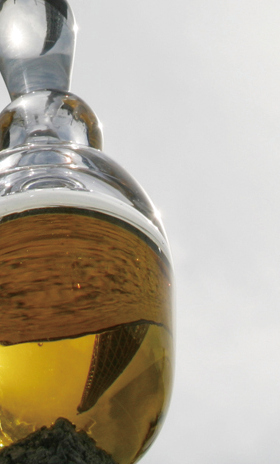 |
| Tokyo in a bottle... |
What
does it take to turn a simple piece of glass into a work of art with a unique shape and color? You can get the answer from a glass maker. Glass makers are masters of their profession. Glassblowing techniques are passed down through apprenticeship.
Glass making began around 3000 B.C. and the modern art of glass blowing was developed in the mid first century. Today, glass makers and glass blowers use different types of equipment and techniques to create artistic and functional pieces of glass art. The end result might be a lovely perfume bottle, a stunning sculpture, or a useful plate or bowl.
So how is glass made? To describe the process in a simple way, a glass
artisan takes pieces of glass, puts them on a pipe, heats them up, then blows
into the pipe and spins it until the glass is just the right shape. Glass making began around 3000 B.C. and the modern art of glass blowing was developed in the mid first century. Today, glass makers and glass blowers use different types of equipment and techniques to create artistic and functional pieces of glass art. The end result might be a lovely perfume bottle, a stunning sculpture, or a useful plate or bowl.
 |
| Bottled Sky Tree |
Such admirable pieces can be created from hand blown glass! When it is complete a piece can be vibrant and colorful, smooth and elegant, or simple, clean and colorless.
Finished pieces will vary greatly in size, shape, and functionality. Glass art can take many forms, including glass blowing, glass casting, stained glass making, bead making, and, glass fusing.
 |
You can see Yokohama through this rounded bottle.
|
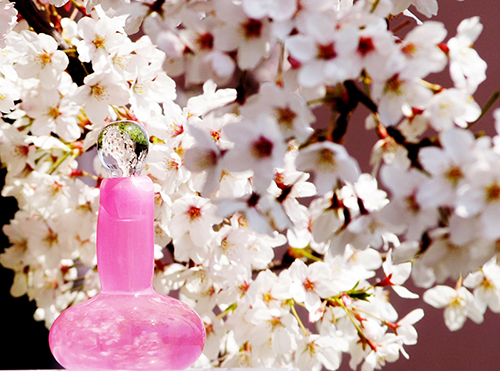 Left: Sakura (cherry blossom) in a pink opaque bottle with clear glass stopper.
Saturday, December 29, 2012
Ichiro's Mission: Revival of a Farming Community
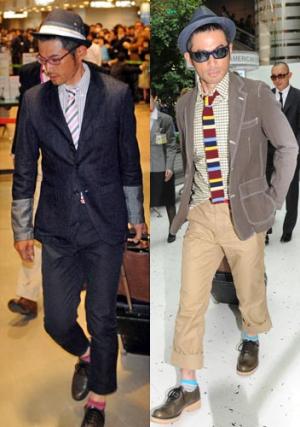 | |
| Ichiro at Narita (from Nikkan Sports News) |
The village of Kanoya, on the other hand, was a typical farming community where young people left for urban areas, and the biggest population was retirement age folks. It seemed like a community that would one day in near future become extinct.
A leader of the community who had no way to stop the departing young people one day suggested, "Hey, why don't you go and see Ichiro by earning some money and making the trip to Tokyo?" The kids started farming sweet potatoes. A land which no longer had people to farm was donated for the purpose. Since kids no longer worked in the fields, they didn't know how to grow sweet potatoes. Both active farmers and retired citizens helped the kids.
They made some profit from the sweet potatoes -- it was enough to get the kids to Fukuoka Dome stadium in Fukuoka, which is in the biggest city in the Kyushu island, instead of Tokyo Dome. The Ichiro mission of those kids was completed; it also presented a shining opportunity to the community. They saw they could do something to possibly revitalize the community and prevent a loss of residents. They tried different original products. The entire community participated in this mission.

Take a look. I want to show you the community and the products but this is the best image I could find on the Internet. I could hardly surf around in their text-only oriented blog style website. You probably can tell how commercial they are. Their site is www.yanedan.com.
One of their original products is organic compost from their livestock. Their local bacteria does something to it and it reduces the odder. It grows their organic vegetables and is used for other purposes too. Municipal governments from all over in Japan now come to learn now this industrious little community made such an ideal revival. They offer empty houses and buildings for artists to move in. Artists sell their art in the community store; young people once left the community returned, invited several families of the tsunami last year.
The area of Kagoshima has no railroad. This made the area isolated from contemporary conveniences therefore young people left. But the trend is changing. People pay extra for getting safe food and non-industrial commodities. Human nature fought back and it made the community one of the pretty getaways in Kyushu and elsewhere. Visitors enjoy browsing around the new artist workshops, and buying organic veggies, water and Shochu. I think (sorry, not many information available) it is not the business they run but in a near-by public bathing facility; their water is heated by burning trash. The water is mineral spring but the temperature isn't high enough so the trash burning heat is used. This way of using the same source for heating both the bath and swimming pool is pretty common in Japan. It is not their original idea at all but it fits their organic and community-oriented concept.
Here are their cornerstone ideas, called the Ten Articles of Creation School:
- Laugh during hard times.
- Always discover human treasures (human resources).
- Respect everyone's opinion.
- Pass and teach information to others.
- Don't do it by yourself. Do it with 100 people.
- Adopt the viewpoint of children and the wisdom of the old.
- Support the successes of leaders who will lead the next generation.
- Move other people by tears and sweat.
- Put soul into each word.
- Recharge the community with your own strength.
As a big sports fan, I say it's a beauty of heroes. They move fans by working hard and doing what they are good at. Without a baseball hero like Ichiro, the first step might have never been taken. It's another good job on Ichiro's part, though he probably he doesn't know about this. Even non-sports fans know and can applause. The regular outfit of him like the above photos by the way, although it makes news in Japan every time he returns, uhh... well... no comment.
Friday, December 28, 2012
Hideki Matsui Announces His Retirement From Baseball

This is kind of a meaningful
story to me because I got to watch his career take off when I first lived in
Japan. In the early 1990s I remember watching him on Japanese TV when he was
still in high school, playing at Koshien Stadium at the annual summer baseball tournaments. He was obviously a rising star in baseball;
everyone watched and talked about him. I just didn’t know at the time
that he would become an admired athlete in both Japan and the United
States.
Matsui was born on
June 12, 1974 in Neagari, Ishikawa, and grew up playing baseball with his older
brother and friends. He was such a good
hitter that his brother made him bat left-handed. Matsui then became an
overpowering left-handed batter, though he would throw a baseball with his right hand as an
outfielder.
 Matsui was
recruited by Seiryo High School in Kanazawa, Ishikawa, a Honshu Prefecture
school known for its high profile baseball team. During his high school years,
Matsui played in four National High School Baseball Tournaments at Koshien
Stadium. In 1992, he drew five intentional
walks in a game at Koshien. This was quite controversial. The intentional walks
were thought to be unsportsmanlike. The strategy was effective though; Matsui's
team lost that game and was eliminated from the tournament. His reaction
to the intentional walks made the news. It was reported that Matsui was calm
and emotionless. He didn’t take it personally. His demeanor was highly praised by everyone –
fans, tournament officials, and news reporters.
At the end of the tournament, someone with the High School Federation
stated all students should model Matsui's good attitude. After high graduation he ws drafted by the Yomiuri Giants, led by the great manager Shigeo Nagashima. He played on the Giants team for ten years.
Matsui was
recruited by Seiryo High School in Kanazawa, Ishikawa, a Honshu Prefecture
school known for its high profile baseball team. During his high school years,
Matsui played in four National High School Baseball Tournaments at Koshien
Stadium. In 1992, he drew five intentional
walks in a game at Koshien. This was quite controversial. The intentional walks
were thought to be unsportsmanlike. The strategy was effective though; Matsui's
team lost that game and was eliminated from the tournament. His reaction
to the intentional walks made the news. It was reported that Matsui was calm
and emotionless. He didn’t take it personally. His demeanor was highly praised by everyone –
fans, tournament officials, and news reporters.
At the end of the tournament, someone with the High School Federation
stated all students should model Matsui's good attitude. After high graduation he ws drafted by the Yomiuri Giants, led by the great manager Shigeo Nagashima. He played on the Giants team for ten years. In December 2002 Matsui signed on with the New York Yankees. In his first game at Yankee Stadium, the 2003 home opening game, he hit a grand slam home run - the first Yankee ever to do so. He played with the Yankees for seven seasons and did very well. On August 5, 2007 Matsui became the first Japanese player in Major League Baseball history to hit 100 home runs. In the summer of 2008 Matsui began to experience knee pain. From that time on, the physical issue affected his ability to play. He eventually signed three consecutive one-year contracts afterwards, with the Los Angeles Angels, the Oakland Athletics, and Tampa Bay Rays. Over his career, it is estimated he has
earned $84 million in salary over 10 years in the United States, in addition to
¥2.3 billion ($27 million) paid to him by the Giants over 10 years.
In December 2002 Matsui signed on with the New York Yankees. In his first game at Yankee Stadium, the 2003 home opening game, he hit a grand slam home run - the first Yankee ever to do so. He played with the Yankees for seven seasons and did very well. On August 5, 2007 Matsui became the first Japanese player in Major League Baseball history to hit 100 home runs. In the summer of 2008 Matsui began to experience knee pain. From that time on, the physical issue affected his ability to play. He eventually signed three consecutive one-year contracts afterwards, with the Los Angeles Angels, the Oakland Athletics, and Tampa Bay Rays. Over his career, it is estimated he has
earned $84 million in salary over 10 years in the United States, in addition to
¥2.3 billion ($27 million) paid to him by the Giants over 10 years.
Hideki Matsui remains a famous and revered sports figure among baseball players and fans, especially at home
in Japan. Many hope he will one day manage his former
team, the Yomiuri Giants. We’ll have to wait and see what his future holds, including whether the Giants will lure him back into the game with a prized leadership role. Talking about his decision to leave the Major Baseball League and the United States, Matsui's father
Masao, 70, said his son had "nothing to regret as a baseball player with
such good results."
Thursday, November 1, 2012
Old New Tokyo Station
Tokyo Station City
Tokyo Station has served as the main entrance to Tokyo since 1914. After the damaging effects of WWII, this historic building has been in use, even though parts of the structure were never renovated. Then in 2007 the city made strides to restore and rebuild the original look of the station. Now the construction has been completed. Tokyo Station is at the same location as it has ever been, and you can go take a look when it opens to the public on October 3. The new station with the 100-year old very original look is a sight you should see!
The video above showcases the Tokyo Station Hotel which also has been restored. It includes special suites that have a view of the inside of the restored South Dome of Tokyo Station, which had been lost in a WWII air raid. The video explains how precisely the dome interior decorations were restored using as references only six photographs and the descriptions in documents indicating the colors.
Last time I saw the station was right after the Earthquake. At the time the city was in energy-saving mode. Japan was not sure what could come next after the Fukushima nuclear power plant disaster, so to prevent blackouts, each individual managed to "save"electric power by reducing their use. In addition, each family followed their own power saving strategy, for example, to light only the living room or restrict hours of TV watching. Many street lights and electric signs were turned off so Tokyo and many (I guess"all" but I don't know any exception or sabotage) cities in the northern half of Japan had quite darker nights over the year. My last experience of Tokyo Station was under those darkened conditions. When I saw construction tarps all over the building, I thought it had damaged by the earthquake. Under the dim lights and the construction tarps, it seemed to me that Tokyo had died.
Well, I feel better now that I know the construction tarps actually hid such a beautiful building underneath.
The video clip further down features one of the opening events; the digital display projects the brick walls of the station.
Tokyo Station, as partially described in the 2/17 post, offers visitors many options for shopping and restaurants. Now you can have a completely updated shopping and dining experience inside of the Tokyo Station. But for the people who grew up before the age of flights, Tokyo Station was always the "central" of Tokyo. People moved here from elsewhere to Japan (mostly from the western half of Japan). The northern half arrived at Ueno Station instead of Tokyo Station. For people who were born and raised in Tokyo like me, the word "Tokyo" meant Tokyo Station. Its outside look with old bricks and classic architecture was the symbol of Tokyo, probably of Japan, for almost 100 years.
What a great job JR Higashi Nihon did choosing precise restoration of 100 years of nostalgia instead of demolition and adding another new building.
Small History of Japanese Trains
The first station in Japan was not Tokyo Station, though. The first railroad ran between Shinbashi (at old Shiodome freight terminal) and Yokohama (nowadays Sakuragi-cho) and was built on September 12, 1872 (the test run was between Shinagawa and Yokohama in May 1872).
The original Shinbashi station has also been partially rebuilt at the original location and now is a small railroad museum. The original Shinbashi station gradually transformed into the Shiodome freight terminal after the Great Kanto Earthquake in 1923. In 1909 Karasuma Station was built at the current Shinbashi station site. When the original Tokyo Station opened, Shiodome became freight-only terminal and Karasuma became the current Shinbashi Station.
◆TOKYO STATION VISION (Opening Ceremony)
The whole experience of the new Tokyo Station is named Tokyo Station City. They have a nice website in Japanese but I haven't found one in English yet. I bet they'll have it some day soon but here is the Japanese version of Tokyo Station City website.
Tokyo Station has served as the main entrance to Tokyo since 1914. After the damaging effects of WWII, this historic building has been in use, even though parts of the structure were never renovated. Then in 2007 the city made strides to restore and rebuild the original look of the station. Now the construction has been completed. Tokyo Station is at the same location as it has ever been, and you can go take a look when it opens to the public on October 3. The new station with the 100-year old very original look is a sight you should see!
The video above showcases the Tokyo Station Hotel which also has been restored. It includes special suites that have a view of the inside of the restored South Dome of Tokyo Station, which had been lost in a WWII air raid. The video explains how precisely the dome interior decorations were restored using as references only six photographs and the descriptions in documents indicating the colors.
Last time I saw the station was right after the Earthquake. At the time the city was in energy-saving mode. Japan was not sure what could come next after the Fukushima nuclear power plant disaster, so to prevent blackouts, each individual managed to "save"electric power by reducing their use. In addition, each family followed their own power saving strategy, for example, to light only the living room or restrict hours of TV watching. Many street lights and electric signs were turned off so Tokyo and many (I guess"all" but I don't know any exception or sabotage) cities in the northern half of Japan had quite darker nights over the year. My last experience of Tokyo Station was under those darkened conditions. When I saw construction tarps all over the building, I thought it had damaged by the earthquake. Under the dim lights and the construction tarps, it seemed to me that Tokyo had died.
Well, I feel better now that I know the construction tarps actually hid such a beautiful building underneath.
The video clip further down features one of the opening events; the digital display projects the brick walls of the station.
Tokyo Station, as partially described in the 2/17 post, offers visitors many options for shopping and restaurants. Now you can have a completely updated shopping and dining experience inside of the Tokyo Station. But for the people who grew up before the age of flights, Tokyo Station was always the "central" of Tokyo. People moved here from elsewhere to Japan (mostly from the western half of Japan). The northern half arrived at Ueno Station instead of Tokyo Station. For people who were born and raised in Tokyo like me, the word "Tokyo" meant Tokyo Station. Its outside look with old bricks and classic architecture was the symbol of Tokyo, probably of Japan, for almost 100 years.
What a great job JR Higashi Nihon did choosing precise restoration of 100 years of nostalgia instead of demolition and adding another new building.
 |
| Original Shinbashi Station |
The first station in Japan was not Tokyo Station, though. The first railroad ran between Shinbashi (at old Shiodome freight terminal) and Yokohama (nowadays Sakuragi-cho) and was built on September 12, 1872 (the test run was between Shinagawa and Yokohama in May 1872).
The original Shinbashi station has also been partially rebuilt at the original location and now is a small railroad museum. The original Shinbashi station gradually transformed into the Shiodome freight terminal after the Great Kanto Earthquake in 1923. In 1909 Karasuma Station was built at the current Shinbashi station site. When the original Tokyo Station opened, Shiodome became freight-only terminal and Karasuma became the current Shinbashi Station.
The whole experience of the new Tokyo Station is named Tokyo Station City. They have a nice website in Japanese but I haven't found one in English yet. I bet they'll have it some day soon but here is the Japanese version of Tokyo Station City website.
Subscribe to:
Comments (Atom)