Friday, May 31, 2013

Today Chicago Loop Gets First Tokyo Style Pedestrian Scramble!

The local ABC Chicago news station has just released a news story and video about a new development affecting thousands of drivers and pedestrians on a daily basis who navigate the downtown business district known as the Chicago Loop. Starting today, Chicago is getting its first pedestrian scramble. Pedestrians at State Street and Jackson Boulevard in Chicago's Loop can now cross diagonally through the intersection.

For those of us who know any of Tokyo's large and busy scrambles, seeing an image of the Chicago crosswalk may prompt a smile. That's because ours is quite smaller by comparison, due to the density of the Loop area. But it is nevertheless a big deal here, and actually a serious matter, since drivers will need to be aware that they can no longer make turns in this intersection.  Pedestrians also need to understand how to cross these streets safely. So news stations are broadcasting reports about the all-way pedestrian crossing, telling Chicagoans what to expect and how to navigate through this intersection. Click here to view one of these video broadcasts. The intersection now has a 35-second traffic cycle in which all traffic, including bicycles, stops to allow people on foot to cross the street in any direction, even diagonally. This is a pilot program.  If it is successful, more scrambles may be added.  This particular intersection was chosen because of its close proximity to DePaul University's Loop Campus and John Marshall Law School.  It is also fairly close to the CTA and Union Station train station.  More than 41,000 pedestrians cross at the intersection of State and Jackson streets each day.

Tokyo has some well known pedestrian scrambles of its own. Maybe the most famous and often-photographed one is the Shibuya Scramble, a crossing directly in front of the Shibuya subway station and in the center of a major shopping district. In the immediate area is also a train terminal and bus terminal.

Here is an image I posted on Flickr awhile back which I took while standing on the edge of this intersection. The large white building connected to the station is the Tokyu Department Store. 

I found an interesting blog called the Japan Bucket List written by a New Zealander. Item #34 on her list is the Shibuya Scramble.  She has some amusing words to describe what it is like.  I agree with her that it is one of the many things you just have to experience when you go to Japan!  Here is the  link.

At least one more scramble I am aware of is the Sukiyabashi Crossing in Yurakucho. That crosswalk is shown here. 


One of my favorite urban hotspots in Tokyo is the Ginza Scramble in front of the Sony Building.  Located in the heart of the Ginza district, the energy at that intersection is just amazing. How can you get an adrenaline rush and a feeling of human connectedness just by crossing the street? Go over to Ginza and navigate across this pedestrian crossing by day or by night - then you'll know!

Wednesday, May 22, 2013

Japan News and Trends - May 2013


I thought readers might like to find out about interesting news and trends making headlines and capturing attention in Japan right now.  This information is gathered from various online news and internet sources. 


THAT’S THINKING OUTSIDE THE BOX
-- A Nagoya movie theater is planning to offer a 4-D experience to moviegoers. While watching the film they will be able to feel wind, sprays of water, fog, even bubbles, and smell scents around them.
-- Two female graduates of the National Defense Academy of Japan have become the first women to serve as commanders aboard Maritime Self-Defense Force ships.

THE POWER OF EVERYONE PITCHING IN
-- Government officials will likely impose no power-saving targets this summer thanks to continuing efforts to save electricity across Japan and progress in building new thermal power plants.

KEY MILESTONES
-- Officials released a report that 44.76 million people have visited the Tokyo Sky Tree since its grand opening last May.  That is far higher than the projected 27.5 million. 
-- A blind Japanese acupuncturist who lives in San Diego is attempting to become the first sightless man to sail across the Pacific Ocean.

THOSE AMBITIOUS SCIENTISTS!
-- Japanese researchers have succeeded in using gene therapy to restore the memory of mice suffering from Alzheimer’s disease.
-- Scientists led by a professor at Toyama College have found that the internal organs of firefly squids “contain a substance that helps reduce liver fat.”
-- Japanese scientists have discovered that drinking four or more cups of green tea a day reduces the risk of strokes by 20 percent. Also, they that found that drinking two or more cups of coffee a day has the same effect.
-- It was reported that Japanese scientists have, for the second year in a row, succeeded in producing artificial rain by spraying liquid carbonic acid onto clouds. 

FIRST TIME MT. FUJI FEE
Mt. Fuji
-- Authorities in Shizuoka and Yamanashi have announced that they will start charging fees to climbers on Mt. Fuji starting this summer.

WORKING FOR NO SALARY NO PROBLEM?
-- A help wanted ad was just posted in Akita. They are looking for someone to “assume control” of a hot spring hotel complex in the resort town of Yuzawa—for free. On the positive side, there is a perk: all the onsen time you desire at no charge.

LONG LIVE ANIME
-- As part of its “anime hero and heroine” series, the Japan Post is going to  issue  Doraemon-themed postage stamps.

DISASTER PLANNING AND PETS
-- Officials in the Environment Ministry are creating guidelines for bringing pets to shelters and temporary housing facilities in the event of a disaster.

UH OH ….
-- Someone stole the bronze medal won by bantamweight Satoshi Shimizu at last year’s London Olympics. What a shame. It was the first medal won by a Japanese boxer in 44 years.
Satoshi Shimizu
-- Of the 127,515,000 people now living in Japan, a record-high 24.1 percent are age 65 or older and a record-low 13 percent are under the age of 14.
-- A Japanese man who traveled to Malaysia to marry a woman he met over the internet was rescued by police after being kidnapped when he arrived at the airport.
-- Anxious officials south of Tokyo are concerned that the 55m-tall Yokohama Bay Bridge, built in 1989 to accommodate the largest ships in the world at the time, may be too low to handle newly built cruise liners and cargo ships.
-- Yahoo Japan, the country's largest web portal, said up to 22 million user IDs may have been leaked during a hack discovered last week. The website posted warnings of the possible breach on its login pages.

ATTENTION ALL ENGLISH INSTRUCTORS
-- Officials at Kyoto University say they plan to conduct half of their liberal arts courses for underclassmen in English by 2018.
-- Listening to the advice of an advisory panel on education reform, Prime Minister Shinzo Abe called on Japanese schools to make their English instruction “more suited for practical use.”

IN THE AUTOMOTIVE WORLD
-- Executives at Honda say the latest model of their Odyssey minivan is the first vehicle of its kind to offer a built-in… vacuum cleaner.  (Ever seen a minivan after kids have been transported in it all day?)  
-- A Japanese man who founded a medical equipment maker in Ohio was named to the US’s prestigious Manufacturing Council, a 26-member body that advises the commerce secretary on local industry.  His name is Hiroyuki Fujita. He is President and CEO of Quality Electrodynamics, LLC.

PHONES & PHONE COMPANIES IN THE NEWS
-- Officials at NTT DoCoMo announced they are setting up 104 emergency base stations around the country that can run on generator power for several days in the event of a major disaster.

-- New phone lineups for 2013 are being presented and marketed to the public. “Senior friendly” phones by Softbank include new features like one touch easy access buttons and built in magnifiers. Many models have larger phone screens. Some have the ability to views videos in HD.
 -- NTT DoCoMo’s latest smartphone has a hover function that lets you scroll without actually touching your phone! All you need to do is hover your finger over the screen to scroll up or down. That should reduce  those smudges that cloud up your phone's screen.
-- Disney themed phones light up to signal an incoming call. 
-- Smartphones can be synched up with bracelets that monitor health indicators.  For a monthly fee the service provider will send messages with selected vital statistics. 

GET YOUR BURGER HERE!
-- American style burgers are the latest trend enjoying widespread popularity. Same goes for vintage American style diners.

Recommendation:  You've got to try an American-inspired gourmet burger in Japan! If you’re in Tokyo, find the AS Classics Diner, near Komazawa Olympic Park in Meguro. Besides the’60s-era America retro interior, this place is reported to offer 19 varieties of burgers, like the Loco burger (topped with avocado, fried egg and secret sauce) and the Hot Rod burger (cheese, fried egg, avocado, home-cured bacon and chili). All burgers come with fries. Patties are made with Australian beef.  The outdoor seating area is popular with dog owners, and a delivery service is available 10am-6pm.  
The list of popular burger restaurants in Tokyo and throughout Japan is growing all the time.  Some of the restaurants making headlines include Arms, Authentic, Beacon, Beat Diner, Burger 5, Gramercy Kitchen, Homework’s, MLB Café Tokyo, Roti, and Tap Borrow.  (The only burger restaurant I have been to on this list is Homework’s in Roppongi.  I had a fantastic burger with onion rings and a salad there!


Tuesday, May 7, 2013

Japan for Budget Travelers, Finally!

One of the "LCC", Peach Aviation
A bad or recovering economy doesn't mean travel to or within Japan can't be done. If anything, it's just the opposite.  This is when some of the best discounts and travel options can be found  The Japanese domestic service industry strives to be competitive to meet customers' needs.  As a result, there are more choices than ever for budget travelers, and include mid to long distance transportation for foreign tourists.

Thursday, May 2, 2013

Ten Things I Will Do On My Next Trip to Tokyo


1.) Buy Drinks from Vending Machines:  I am amazed by Japan’s vending machines 自動販売機 (ji-dou-hanbai-ki), which you’ll find everywhere you go, in the city, suburbs, and small villages. They sell such an incredible variety of items, from drinks to books to electronics.  I like the selection of drinks the best. They can be hot, cold, non-alcoholic, alcoholic, typical -- Coke, coffee, tea, Fanta Orange, energy drinks, and unusual -- aloe water, multi-vitamin infused, cucumber soda, Pepsi Pink, which is a strawberry milk product...  I will stick to buying my favorites:  iced coffee and milk tea. Vending machine items are available 24/7 by inserting spare change or, for residents, by swiping with a smartphone.


Some machines also sell food, even fresh Dole bananas.


Others are going high tech and feature a super large touch screen. I want to see one of these!

2.) Go to Koreatown  The area around Shin-Okubo Station is home to many Korean businesses and restaurants. This area is known as Koreatown:  'コリアンタウン'. Shin-Okuko is north of Shinjuku (next stop on the Yamanote line). It's close to Waseda University and Takadanobaba. In this vicinity there are plenty of Korean bistros, cafes, and groceries. The area is often called the Little Korea of Tokyo. Since I like K-pop and Korean skincare products, Shin Okubo is a must for me to visit. Korean cosmetics stores, here I come!

3.) Rent a Bicycle  These services have become popular during the past several years. When I lived here I bought a bicycle. Once I lost it by parking illegally, which was very upsetting.  Bike sharing and bike rentals have become a great way to get around by bicycle, for both visitors and residents.  See the blog post appearing this month for more information.

4.) Sing at Karaoke   I’m not a person with a talent to sing 歌う(utau), but the karaoke bars in Japan are so interesting to experience. To go to karaoke カラオケ is a very popular pastime and I like to take part when with a group of friends are going. I often went to karaoke with coworkers when I lived and worked in Osaka and Tokyo. I can remember a time when the selection was only Japanese songs but now there is a much larger selection of English language songs, too.

5.) Walk Around Harajuku and Omotesando-doori   I think Japan fashion is on a level of its own.  People seem to know how to dress, and many pay much attention to their appearance.  In Tokyo, they dress to stand out, to fit in, and to make a statement; they wear what makes them feel good.  I like to read Japanese fashion blogs ブログ (burogu) and fashion magazines 雑誌 (zasshi) to see what Japanese fashionistas like for the current season. Tokyo has the reputation for being one of the main fashion capitals of the world. Walk down beautiful boulevard Omotesando-doori and then turn onto Aoyama-doori and you’ll see why.  I also recommend looking around on the shopping street called Takeshita-doori 竹下通り to see what fashion trends the young people like. It is a beehive of teen and 20-somethings packing streets lined with boutiques and shops.

6.) Visit the Tokyo Sky Tree  This is definitely on my list since I have only seen it in photos. See a post we added last year about this impressive structure.
7.) Dine Out  Especially at Izakaya!  Every time I’m in Japan I love eating the food. All authentic and delicious.  There are high end restaurants of course, but I always end up eating okonomiyaki お好み焼きand yakitori 焼き鳥, croquettes and other simple foods at a neighborhood izakaya, a bar and restaurant with a special relaxed ambiance. 
 
8.) Visit a Cat-cafe: This establishment 猫カフェー is a cafe where you can watch 見る(miru) and play 遊ぶ (asobu) with cats (neko). It’s the perfect opportunity for people who love cats but who are not allowed to have them in their apartments.  As I love cats and have one named Geneva Suki, I really want to go. I have never even been to a theme café before.  (Maid cafés, robot cafés, and anime-based cafes are other specialty establishments where customers are welcome).

9.) Enjoy Coffee Shops   Coffee in Japan is the best. For a front row seat to the Shibuya scramble crossing I like to get a window table at the Starbucks スターバックス in the Tsutaya building right across the Shibuya station 渋谷駅.  There is place I haven't been to yet and want to try: the Nezucafe ネヅカフェーin Minami-Aoyama 南青山. It is said to have a fantastic view of a beautiful wooded garden.

10.) Visit Akihabara (秋葉原). This vicinity in central Tokyo is known as “Akiba” for short. Some call it Electric City too. This is said to be the largest district for electronics, computers, video games and anime in the world.  For many, many blocks in all directions, you can window shop or browse in stores that carry computer equipment, video games, kitchen electronics, smartphones and endless electronics supplies.  Some shops are duty free.  My favorite is the newest and largest department store just a block away from Akihabara Station on the Yamanote Line and Hibiya Line. It is called Yodobashi Akiba.  This immense store has nine stories full of high tech equipment and gadgets. I have seen computers and phones there with such features I didn’t know were possible!  The newest inventions seem to go on display at this store first, for all to see and play with. 

Tuesday, April 16, 2013

Bike Wars and Rent-a-Cycle

Uncontrolled bike parking near a station
This is a typical scene where I feel I'm back in Japan! ha ha... Go to any train station, mainly in the residential areas inside or surrounding big cities, and you'll find a chaotic scattered sidewalk or parking area full of bicycles.

Everyone wants to ride their bike to the closest possible station but most stations were never designed to deal with so many bicycles, since most Japanese train stations were built  long before most people could afford a bike. But the economic development in 1970's made it possible for each member of family to own a bike. Then this easy mode of transportation in the big city showed its problem side: piles of 放置自転車 (houchi jitensha = neglected bicycles) became a huge social problem in Japan in the 80's.

"Neglected" bicycles :'(
Many communities near a station started to form their own enforcement authority (I guess) to forbid bikes to park near the station.  Enforcement was a serious matter.  On the other hand, Japanese love to do things for "authority" and they love to restrict things before happening; the people with the community authority went after and scolded the people right at when they were coming into the area. They chased the bike riders to a park near the station. Even though such intense control, people found a way to park and then neglect their kid, I mean bike.

The scene in the above image was everywhere by busy stations in Japan. It was like the War between the commuters and the community volunteers of anti-parking-a-bike-near-the-station authority.

Controlled bike parking, 100 yen/day
One of earlier solutions of the bike wars was to charge to park bicycles near stations. The image at the right is an example. But the system was inconvenient. Some were run by the municipal government, which means a rider needed to be qualified to rent a bike parking near station. Some were run as a private business; the system varied. And many people found a way to park free anyway and would find the edict saying that the neglected bikes were removed to a neglected bike correction center (you had a certain amount of time to pay a fee and claim your bike).

So it might be fair to say most Japanese people living in big cities have had such an experience with doing something wrong when parking their bike. Rules have varied and there has been no appeal system. No choice, they had to go to one of those places to get their bike back. And obviously, not everyone wanted to.

Meanwhile, Japan had a bubble economy that burst. A new trend arose:  being "eco-friendly" (conscious of ecology and recycling. Communities worked on new solutions. Sharing bikes was put into practice. The  service included bicycle maintenance and parking for a reasonable fee.  This system was easier for residents than visitors, though.  Too many different companies run the train lines in big cities, visitors could hardly figure things out.

As a result, a number of communities started to rent or share bikes for tourists as well.
"Rent-a-cycle" in resort areas has been pretty common for years but now these bike rental services have come into the big cities. People can rent a bike for a long term instead of owning one to commute, which they likely call "share", as well as visitors rent it for a day or by hour. I think it is a great idea that people can ride a bike from one point to another, whether or not you are a resident or visitor, for a reasonable fee. Unless you really want to, you don't have to "own" a bike anymore.  This is progress for the service industry!

Unfortunately, not much information is available in English, but here are some examples.

There are probably a lot more services available at train stations that are near tourist attractions. There should be at least one rent-a-cycle shop somewhere close by. 

Baybike port in Yokohama
YOKOHAMA Baybike
I hear London and Paris have a similar system. Yokohama city currently runs the system as a test case. This service is a combination of contract port-to-port short terms, per day, for a long term contract. A user needs first to register but once you do you can rent a bike from any "port" in the bay area of Yokohama. The user can rent a bike to take from one port to another port (105 yen), or for 24 hours (525 yen), or for a month (1050 or 1550 yen) but you have to get the bike back to the home port in 1 hour from when you first pick up the bike or you will be charged 105 yen/30 min. otherwise. In the bay area, most tourist attractions have the "port", so the user can take the rented bike back to the port instead of parking elsewhere. Users won't get surcharged as long as they ride the rented bike in the area. If they ride it away from any port then they'll pay 105 yen for each extra 30 minutes.

Matsumoto "Sui Sui Town" and "Rikisha" (in Nagano Prefecture)
Two different groups offer FREE rent-a-cycle services in Matsumoto. One group is the association of the local shops and hotels so the shops and hotels rent the bikes. Another is the tourism and convention association whose rental stations are by the tourist attractions. Matsumoto is a city close to the mountainous area called Japan Alps, it has clear air and spring water even inside the city. One of the Japanese national treasures is Matsumoto Castle. It takes only 2.5 hours from Shinjuku (Tokyo) station by JR, 2 hours from Nagoya (Aichi) station. Though many more stations in Japan have a bike rental service,  "for free" is not too common!  Take advantage of this! In Nagano prefecture, places such as Iida, Shimosuwa, Matsushiro, Obuse, etc., offer rent-a-cycle services for minimal fees.


JR Kyushu "Raku Chari" and Other Services in Kyushu
Selected JR stations in Kyushu offer a rent-a-cycle service by 300 yen for 2 hours, 600 yen for 4 hours and 900 yen for longer than 4 hours. The participating stations are: Karatsu (Saga), Sasebo and Nagasaki (Nagasaki), Hitoyoshi and Kumamoto (Kumamoto), Beppu and Yufuin (Oita), Miyazaki (Miyazaki), and Kagoshima Chuo and Ibusuki (Kagoshima).  In Kyushu, Saga city (Saga Station) also provides a renta-cycle service called Kettakuri but the local tourism and convention association provides the service, not JR Kyushu. It seems only private services cover the Hakata (Fukuoka) area.

Hankyu Rent-a-Cycle
This is a commuter service more than just for tourists. The stations of Hankyu Line (runs in Osaka, Kyoto, Kobe area) offers rentals by the month or longer term in addition to regular shorter term contracts like by the hour or day. All stations are not in the central area, it is quite convenient for the long term visitors along the Hankyu Line. JR also has a similar service Ekirinkun

Taito-ku / Bunkyo-ku / Setagaya-ku Renta-Cycle
In Tokyo,  three wards offer bike rental services. Taito-ku is near Asakusa aera, Bunkyo-ku is around Korakuen Dome stadium and Tokyo University, Setagaya-ku is in the west edge of Tokyo. These web pages load automatic translation, I just hope they make sense.

Tokyu Line Cycle-Share 
This is a similar service to the one Hankyu Line provides in Osaka/Kyoto/Kobe area. Tokyu Line runs the area around the west of Tokyo and Kanagawa (Yokohama & Kawasaki), they have a bike sharing service near their stations of Futako-tamagawa (Setagaya-ku) and Shinmaruko (Kawasaki city).

Osaka HubChari
This is a sharing bike service in Osaka. They have 10 "ports" in Osaka city. The idea is similar to the Yokohama BayBike mentioned above. This service is run by the NPO Homedoor which aids homeless people by hiring them for the bike share business.

+++++++

The services described here are only from the areas I'm familiar with. There are probably a lot more.  . Please contact us if you know of any service you recommend!  We'll try some of the rent-a-cycle services in Japan and report how they are!


Tuesday, January 22, 2013

Bottled Tokyo

Tokyo in a bottle...
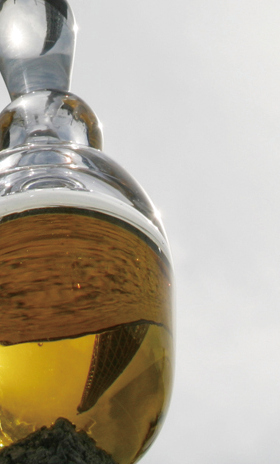
Look closely and see if you can figure out what famous Japan landmark is reflected in the bottle.  Can you tell?  We will tell you in a minute.  First, let's look again, this time not at the reflection but at the piece of glass itself.

What does it take to turn a simple piece of glass into a work of art with a unique shape and color?  You can get the answer from a glass maker.  Glass makers are masters of their profession.  Glassblowing techniques are passed down through apprenticeship.
 
Glass making began around 3000 B.C. and the modern art of glass blowing was developed in the mid first century. Today, glass makers and glass blowers use different types of equipment and techniques to create artistic and functional pieces of glass art. The end result might be a lovely perfume bottle, a stunning sculpture, or a useful plate or bowl.

So how is glass made? To describe the process in a simple way, a glass artisan takes pieces of glass, puts them on a pipe, heats them up, then blows into the pipe and spins it until the glass is just the right shape.  

Bottled Sky Tree
By the way, did you guess correctly?  The reflection of the famous landmark? It is the Tokyo Sky Tree.  

Such admirable pieces can be created from hand blown glass!  When it is complete a piece can be vibrant and colorful, smooth and elegant, or simple, clean and colorless. 

Finished pieces will vary greatly in size, shape, and functionality. Glass art can take many forms, including glass blowing, glass casting, stained glass making, bead making, and, glass fusing. 

 You can see Yokohama through this rounded bottle.
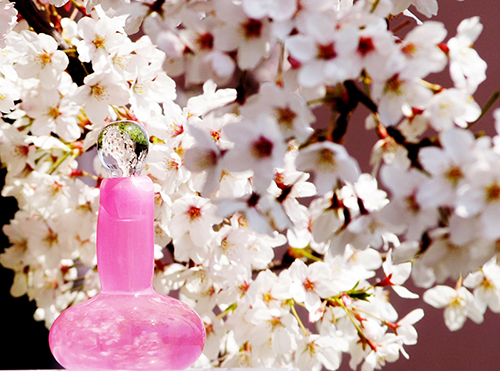
The creator of all of the amazing pieces shown here is an artist by the name of Chambo.  He is a native of Tokyo and has spent years working to create fantastic pieces of glass artwork.  Take a look at more of his works at the right and below, made even more stunning by artful photography.


Left: Sakura (cherry blossom) in a pink opaque bottle with clear glass stopper.